


How I Recreated 90s Synth Sounds in Serum 2

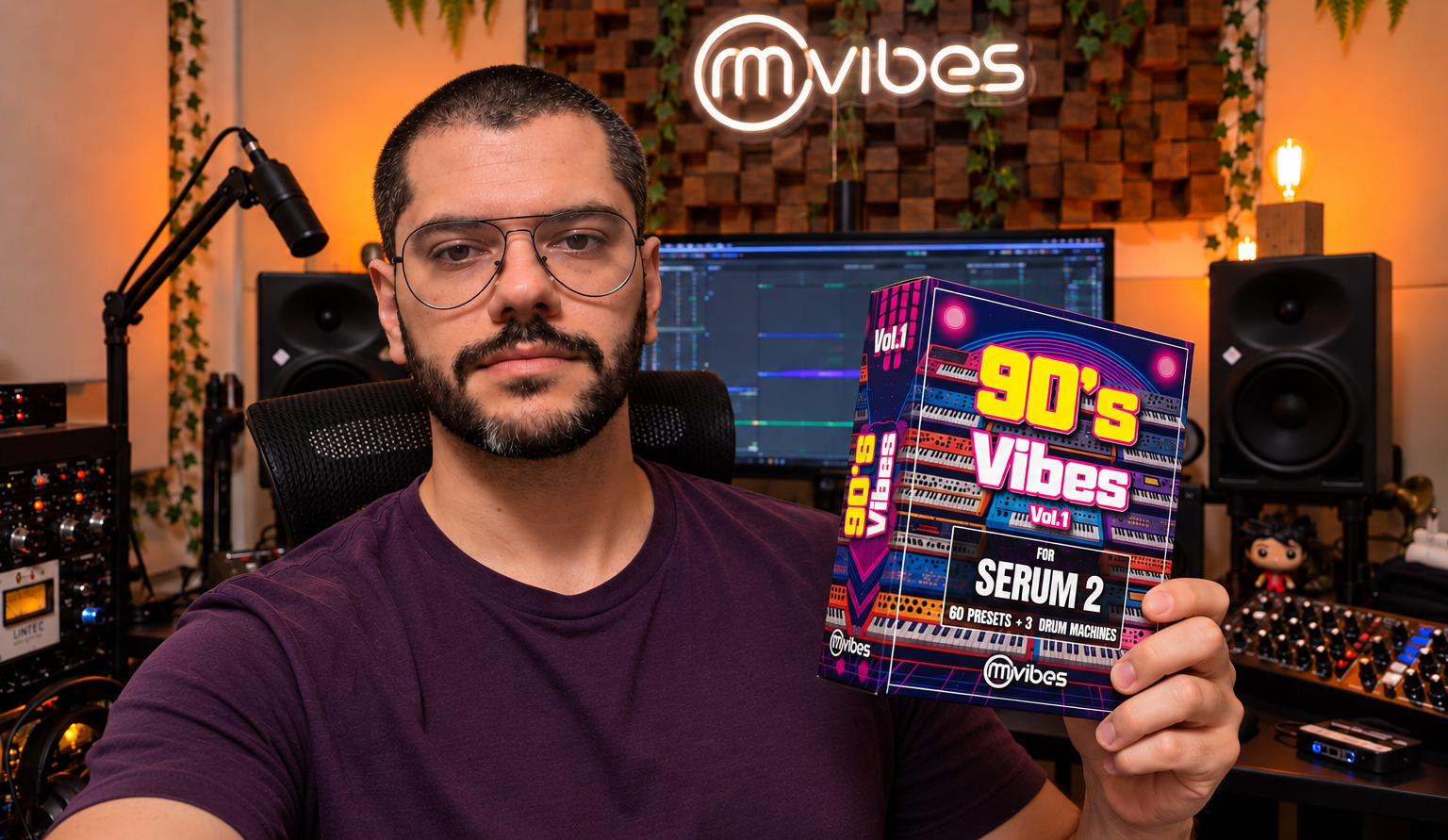
Why I Created 90's Vibes
The sound of the 1990s has always been a huge reference for electronic music producers, including me.
There is something very particular about the sounds of that era — the basses, rave leads, house pianos, pads, stabs and drum machines. Many of those sounds were created with hardware that became iconic, and their character is still present in electronic music more than 30 years later.
That nostalgia was one of the main reasons I created 90's Vibes.
But I didn't want to make another preset pack that was simply “inspired by the 90s”. I wanted to get as close as possible to the actual sounds and equipment that defined the era, and then recreate those characteristics inside Serum 2.
The result is a collection of 60 presets based on iconic 90s tracks, covering styles including House, Trance, Eurodance, Rave, Garage, Hip Hop, French Touch and Techno.
Why I Wanted to Recreate the Real 90s Sound
When I look at many “90s” preset packs available today, I often feel that they capture the general idea of the decade but don't go far enough in terms of accuracy.
For me, simply adding some detuning, analog-style effects and calling a sound “90s” isn't enough.
I wanted to understand why those sounds sounded the way they did and recreate the characteristics of the original equipment as closely as possible.
The goal was not to modernize the sounds.
The goal was fidelity.
Using Real Hardware as a Reference
For this project, I used several pieces of hardware as references, including my TB-303 and Yamaha TX81Z, and I also borrowed a Korg M1 specifically for the project.
I also used my Behringer Model D as a reference when working on sounds inspired by Moog synthesizers.
Having access to the actual instruments was important because it allowed me to study the characteristics of the original sounds instead of simply guessing how they should behave.
The Korg M1, TB-303, Moog-style sounds, FM synthesizers and classic drum machines all contributed very different elements to the sound of 90s electronic music.
My job was to understand those characteristics and translate them into Serum 2.
Recreating the TB-303 in Serum 2
The TB-303 was one of the sounds I went much deeper into.
I didn't just try to make a bass that sounded vaguely like a 303.
I wanted to recreate the behavior of the instrument itself.
That included studying the range of the controls and trying to reproduce things such as the frequency range of the filter, resonance behavior and the way the controls interact with each other.
Serum 2's modulation system made this particularly interesting.
For the 303 preset, I used an unusually large amount of routing in the Serum 2 Matrix. I don't think I had ever created so many relationships inside the Matrix for a single sound before.
Different parameters interact with each other so that the sound doesn't simply imitate the basic waveform of a 303 — it behaves more like the instrument I was trying to recreate.
That level of detail was important to me because the character of these classic synthesizers isn't determined by one oscillator waveform alone.
Using Samples as Wavetables
Another technique I used throughout the project was taking samples from original sources and using them as the basis for wavetable sounds.
Serum has supported the use of samples as wavetable sources since the first version, but Serum 2 gave me even more possibilities to explore this approach alongside its other sampling and synthesis features.
This was particularly useful when I wanted to reproduce the harmonic structure of sounds that are difficult to recreate accurately using a simple oscillator configuration.
Instead of guessing which harmonics should be present, I could start from the actual source and build from there.
The Korg M1 Sound
The Korg M1 was especially important for this project.
The M1 Piano is one of those sounds that immediately places you in a particular era of electronic music. It has been used so extensively that it has almost become part of the vocabulary of dance music itself.
For the M1 Piano, I used samples from the original instrument because I wanted to preserve that character as accurately as possible.
I also created an M1 Organ Bass, and in this case I found that using the original sample as the basis for the wavetable produced an even better result than trying to recreate the sound purely through synthesis.
These sounds are important to me because they aren't simply historical sounds.
They're still being used in electronic music today, more than 30 years after the M1 was released.
I believe these sounds will continue to be useful for a very long time, which is one of the reasons I consider them essential sounds for electronic music production.
Creating 90s Synth Sounds: Pads and Stabs
The pads required a different approach.
For some of them, I used frequency analyzers to study the harmonic content of the original sounds and then built wavetables with harmonic structures that were as close as possible to what I was hearing.
This allowed me to work from the actual spectral characteristics instead of simply trying to make something that felt “retro”.
For the stabs, I used samples when that was the best way to preserve the original character.
The goal throughout the process was the same: get as close as possible to the source rather than creating a generic approximation.
Recreating the Drum Machine Sound
The drum sounds were another important part of the project.
The pack includes three drum machine kits, built around sounds from classic vintage analog drum machines.
I don't own all of the original drum machines, so for these I used original drum machine samples from reliable sources that had been sampled from the actual hardware and made available for free.
That allowed me to work with the real character of machines such as the TR-707, TR-808 and TR-909, rather than trying to synthesize an approximation of their sounds.
For a pack focused on recreating the sound of an era, I think that distinction matters.
Keeping the Original Character While Making the Presets Usable
Although accuracy was the main goal, the presets still needed to work as actual instruments inside Serum 2.
That's where I paid attention to the way the presets were structured.
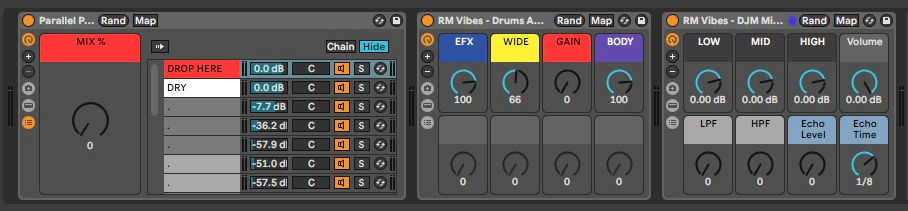
I added macros whenever I found a useful range of movement without destroying the sweet spot of the original sound.
I don't believe every preset needs a huge number of macros just for the sake of having controls.
If a sound has a very specific character, I would rather preserve that character than turn it into something completely different.
The idea is to give the producer room to shape the sound while keeping its original identity.
Making the Presets Mix-Ready
My experience with mixing and mastering also influences the way I build presets.
I don't want a sound to be impressive in isolation but problematic as soon as it is placed into a real production.
That's why I use Serum 2's Bus system for things such as processing the reverb separately from the main sound.
I can, for example, EQ the reverb itself and control its frequency content rather than allowing the effect to occupy the same space as the main sound.
I also use a limiter at the end of the processing chain so that the presets have a consistent and safe output level.
For this collection, I set the presets to reach approximately -4.5 dB peak, giving them a consistent level while leaving sensible headroom.
The objective isn't simply to make everything loud.
It's to make the presets immediately usable when you start producing.
The Reference MIDI Is Part of the Sound
One of the things I'm particularly proud of in 90's Vibes is the MIDI preview system.
Every preset has a MIDI preview based on the actual reference track that inspired the sound.
That means you don't just hear a random melody playing through a preset.
You can hear the sound performing the musical phrase where that type of sound became recognizable.
This is especially useful when browsing the presets because you can immediately understand what the sound was designed to reproduce and why it works.
The pack includes the MIDI demos in the Clip Session, as well as browser previews for the presets.
Recreating Sounds From Iconic 90s Tracks
The collection was built around a large number of tracks that defined the sound of the decade.
Some of the references include Technotronic – Pump Up the Jam, Snap! – Rhythm Is a Dancer, Reel 2 Real – I Like to Move It, Daft Punk – Da Funk and Around the World, Faithless – Insomnia, Crystal Waters – Gypsy Woman, Haddaway – What Is Love and Gala – Freed From Desire, among others.
For some references, I created more than one preset because there were multiple important sounds to recreate.
I might work on the bass, a pad, a lead or another element depending on what made that particular track recognizable.
This is what makes the pack more than a collection of generic “retro” presets.
The sounds are connected to actual productions that became hits.
Why These Sounds Still Matter Today
One of the things that surprised me during this project was realizing how many of these sounds are still completely relevant today.
The M1 piano.
The 303.
FM basses.
Classic drum machines.
House stabs.
Rave leads.
These sounds are more than 30 years old, but producers continue to use them.
That's because great sounds don't really have an expiration date.
A sound can be strongly associated with a particular period and still work perfectly in a modern production.
That's exactly why I wanted to recreate these sounds instead of simply treating them as nostalgia.
What I Want You to Feel When You Play the Presets
When someone opens 90's Vibes and starts playing the presets, I want them to feel like they've gone back to the 1990s.
Almost as if they suddenly have access to the entire arsenal of synthesizers, drum machines and production ideas that defined that era.
You should be able to play a preset and immediately recognize the character behind it.
Not just “this sounds retro.”
But:
“I know this sound.”
That's the feeling I was trying to capture throughout the entire project.
60 Serum 2 Presets Inspired by the 90s
The final collection contains 60 Serum 2 presets, covering BASS, SYNTHS, KEYS, PADS, STABS and DRUM MACHINES, with three vintage drum machine kits included.
The sounds cover House, Trance, Eurodance, Rave, Garage, Hip Hop, French Touch and Techno, while remaining focused on the characteristic sound palette of the 1990s.
For me, the most important part isn't the number of presets.
It's the amount of history behind them.
Every sound was created with the intention of getting closer to the instruments and productions that made these sounds famous.
Final Thoughts
90's Vibes started with nostalgia, but the project became much more than that.
It became an exercise in understanding why certain sounds from the 1990s became so iconic and how to recreate their character inside a modern synthesizer.
I used real hardware whenever possible, studied original sounds, worked with samples and wavetables, analyzed harmonics, recreated synthesizer behavior and built MIDI previews around the original references.
The result is a collection designed for producers who don't just want something that sounds “retro”.
They want to feel the 90s again.
And that's exactly what I wanted to achieve.
60 Serum 2 presets. Iconic sounds. Real references. One trip back to the 90s.




Comments